
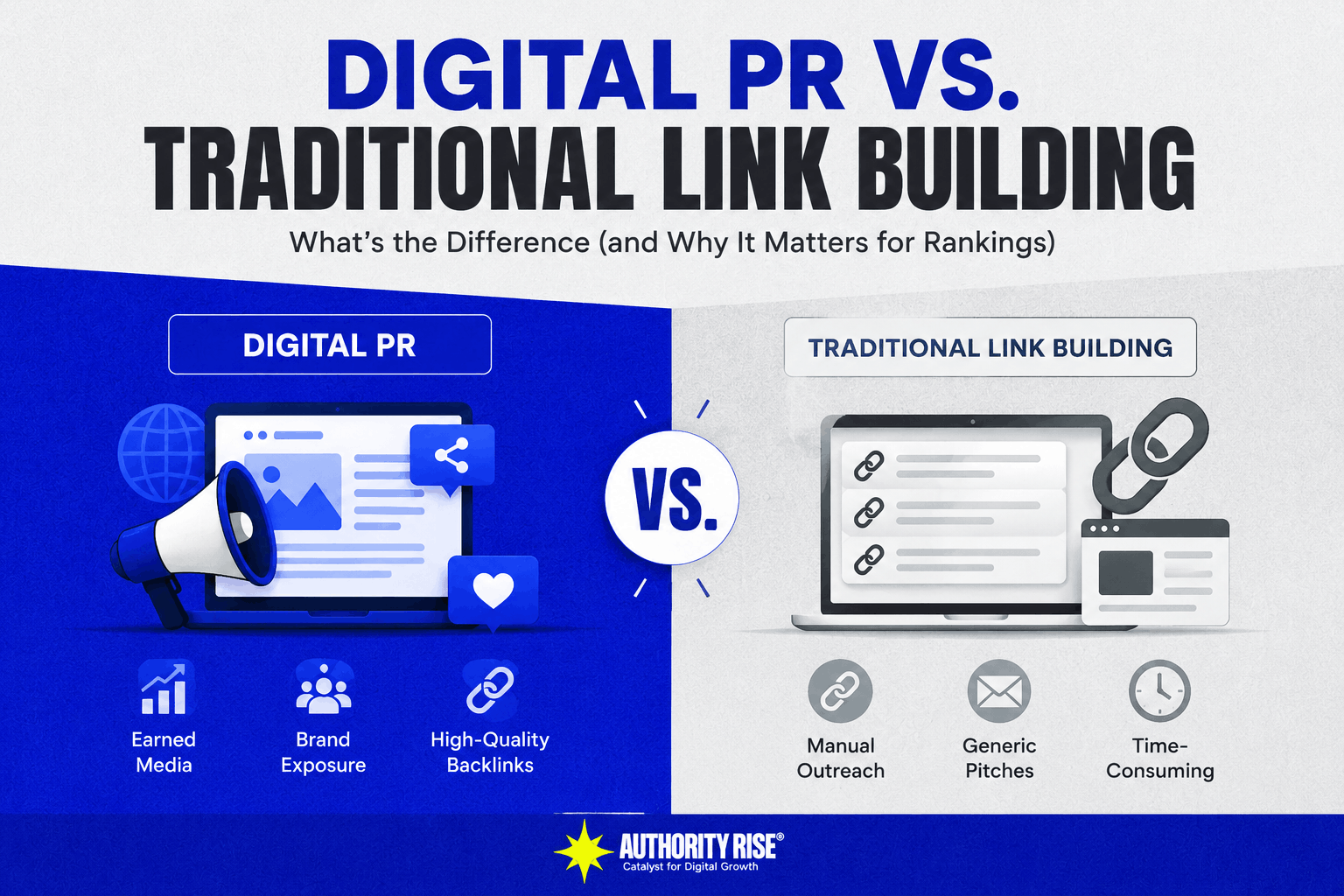
Digital PR and traditional link building both improve SEO, but Digital PR focuses on brand visibility and earned media, while traditional link building centers on acquiring backlinks through outreach and placements.
A client asked us last month: "Aren't digital PR and link building just two names for the same thing?" Fair question — a lot of agencies use the terms loosely, sometimes on purpose, because "PR" sounds more premium than "link building" even when the work behind it is identical.It isn't the same thing. And mixing them up usually means you end up paying for one while expecting results from the other. Here's the actual difference, and how to figure out which one your brand needs right now.
What Is Digital PR in SEO?
Strip away the buzzword and digital PR is just this: getting a journalist to write about you because you gave them something worth writing about. A data point nobody's published before. A sharp take on something happening in your industry. A founder willing to say something other than the usual LinkedIn platitudes.The link, when it shows up, is the journalist's choice — not something you negotiated for. That's the part people miss. You're not buying placement, you're earning attention.What this usually looks like in practice:Original research or survey data your team ranA founder or exec offering commentary reporters can quoteA timely reaction to industry news, packaged fast enough that it's still relevantSometimes you get a backlink, sometimes just a brand mention — both still count for something
What Is Traditional Link Building?
This is the more familiar territory — guest posts, niche edits, broken link outreach, resource page pitches. You're reaching out directly, often at volume, and the conversation usually ends with "can we get a link in exchange for this content/payment/value."It's transactional, and there's nothing wrong with that. It's predictable. You know roughly how many links you'll get for how much budget, and you can target specific anchor text or pages in a way digital PR simply doesn't allow.The tradeoff: the content exists to justify the link, not the other way around. Readers and search engines can usually tell the difference.
Why Digital PR Actually Moves Rankings?
Here's the part that matters if you're trying to rank, not just collect links: Google (and increasingly, AI-driven search) cares less about how many links point at you and more about whether the right sites are vouching for you. A single mention in a publication that's actually relevant to your space tends to carry more weight than ten guest posts on sites nobody's heard of.There's also a quieter benefit that doesn't show up in most link-building pitches — unlinked brand mentions. When your company name shows up in an article even without a clickable link, it still feeds into how search engines (and AI tools generating answers) understand who you are and whether you're a credible source. That's becoming harder to ignore as more search happens through AI summaries rather than ten blue links.
Questions We Get Asked a Lot
Is digital PR better than guest posting?
Depends what you're optimizing for. PR builds reputation and gets you into rooms guest posting can't. Guest posting gives you more control and faster turnaround. Most solid SEO strategies use both rather than picking a side.
Does digital PR build backlinks?
Yes, but you don't get to demand them. A journalist links back when it serves their story — which, ironically, tends to produce links that carry more trust than the ones you negotiate directly.
How much does digital PR cost for SEO?
More per placement than guest posting, typically, because you're paying for strategy, pitching, and journalist relationships — not just a content slot. The payoff is the visibility and trust you can't really buy through outreach alone.